The Red Line That Never Moved: What the 2013 Syria Crisis Taught Me About Volatility
My name is Joe Tigay, and I learned one of the most valuable lessons of my career by watching a war that never happened.
My perspective on markets was forged in the heat of the CBOE options market maker pits. I made the leap from the physical intensity of the SPX pit to become an early adopter of remote electronic market making—a transition that required translating floor-honed instincts into strategies that could execute at the speed of the screen.
Thanks for reading Joe's Substack! Subscribe for free to receive new posts and support my work.
But my approach was truly cemented during the 2010 Flash Crash. That event represented “peak” chaos and taught me a rule I still live by 15 years later: you can never risk it all. You must have a plan and follow it. Every day, I study the plan to improve it. In this business, anything can happen at any time, so you must always have an exit strategy—which I define as a specific model and plan for making a trade only when certain requirements are met.
My core thesis remains: Markets are experts at pricing in fear, but they rarely know how to price in “nothing happening.”
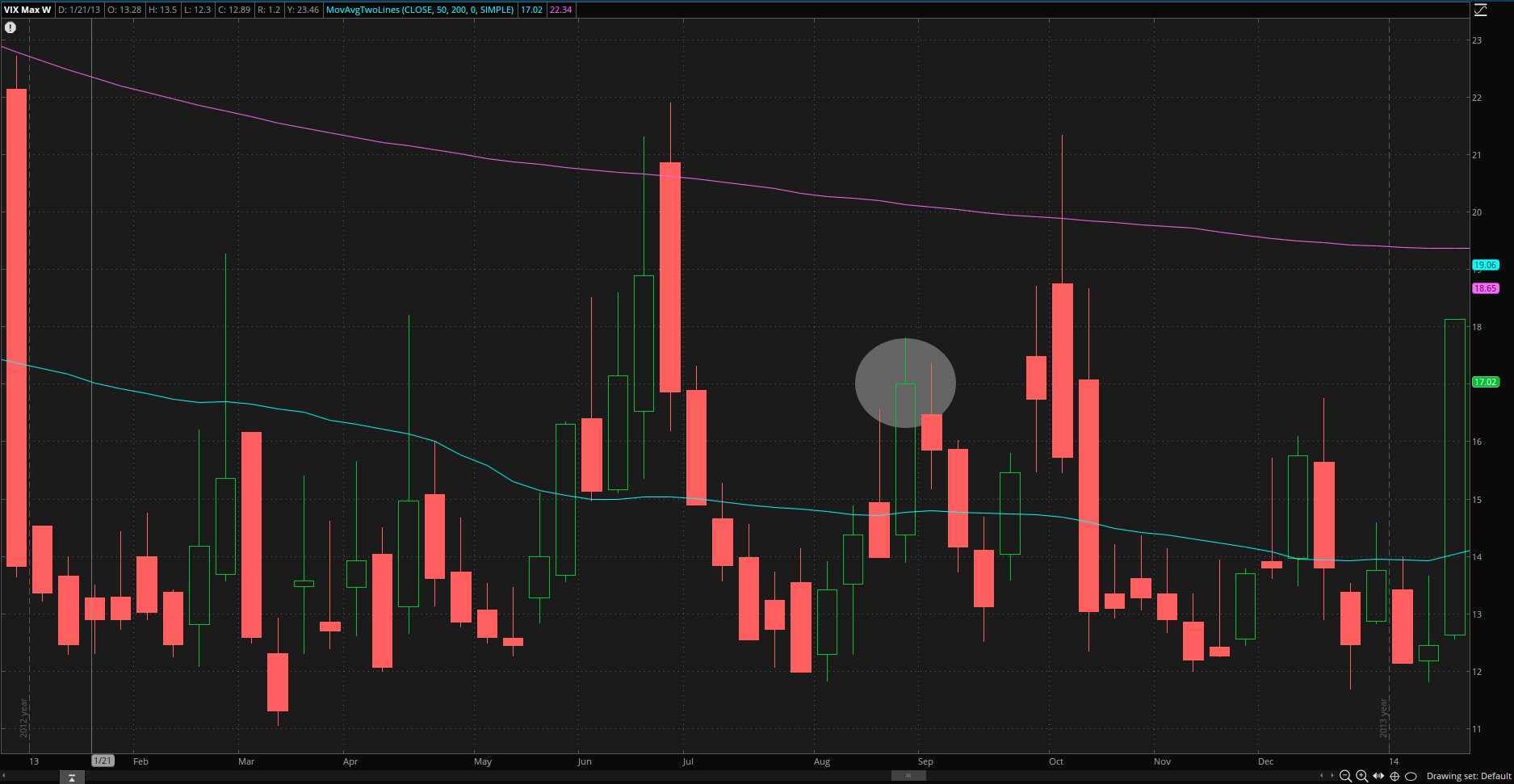
The “Red Line” Setup
In 2013, the world was on edge. President Obama had drawn a “Red Line” regarding chemical weapons in Syria. When reports confirmed that line had been crossed and Russia threatened a response, geopolitical tension reached a fever pitch. On the screens, the VIX began to pump as the world waited for what seemed like an inevitable U.S. missile strike.
I had been consistently making money on contango, watching the VIX mean revert like clockwork. This specific short volatility trade relies on a mechanic known as contango.
Here’s how it works: In VIX contango, the spot price is lower than the front-month future, which is in turn lower than the second-month future. To maintain long VIX exposure, certain instruments must continuously roll from month one to month two. This creates a natural “drag” where the first month falls toward the spot and the second month falls toward the first. The brutal reality? A long volatility strategy is forced to sell low and buy high, continuously, every single day.
The pump ahead of the potential strike was an absolute gift—a textbook setup to expect a return to the mean. My model was screaming at me to take the trade. But I broke a rule. I didn’t follow the plan. I sat on the sidelines, paralyzed by fear of World War III rather than trusting the very system I had built and studied every day.
In 2013, the strike never came. Diplomacy and political hesitation took over, and volatility collapsed exactly as my model predicted it would. It was my personal “Woulda, Shoulda, Coulda” moment—the trade was staring me in the face, but I let apocalyptic headlines override years of experience and a proven framework.
Recognizing Market Exhaustion
To trade volatility like a professional, you must recognize that the VIX is a mean-reverting instrument. Why? Because high volatility is incredibly expensive to maintain. The VIX isn’t just a “fear gauge”—it’s a priced derivative that eventually must come back to Earth.
Exhaustion occurs when everyone is convinced a certain outcome is guaranteed. Over the years, I’ve developed a checklist of sentiment signals:
Historical Echoes: Remember 1999, when taxi drivers were talking about going long on AOL? That kind of universal conviction is a warning sign.
Modern Indicators: Recently, during the Iran/Fordow tensions, I saw a YouTube influencer bragging about going long on oil futures. When the trade has reached influencer status, it’s probably exhausted.
Price Action: When stock trading begins leading the news rather than following it, and people start acting as if making money is “easy,” the end is often near.
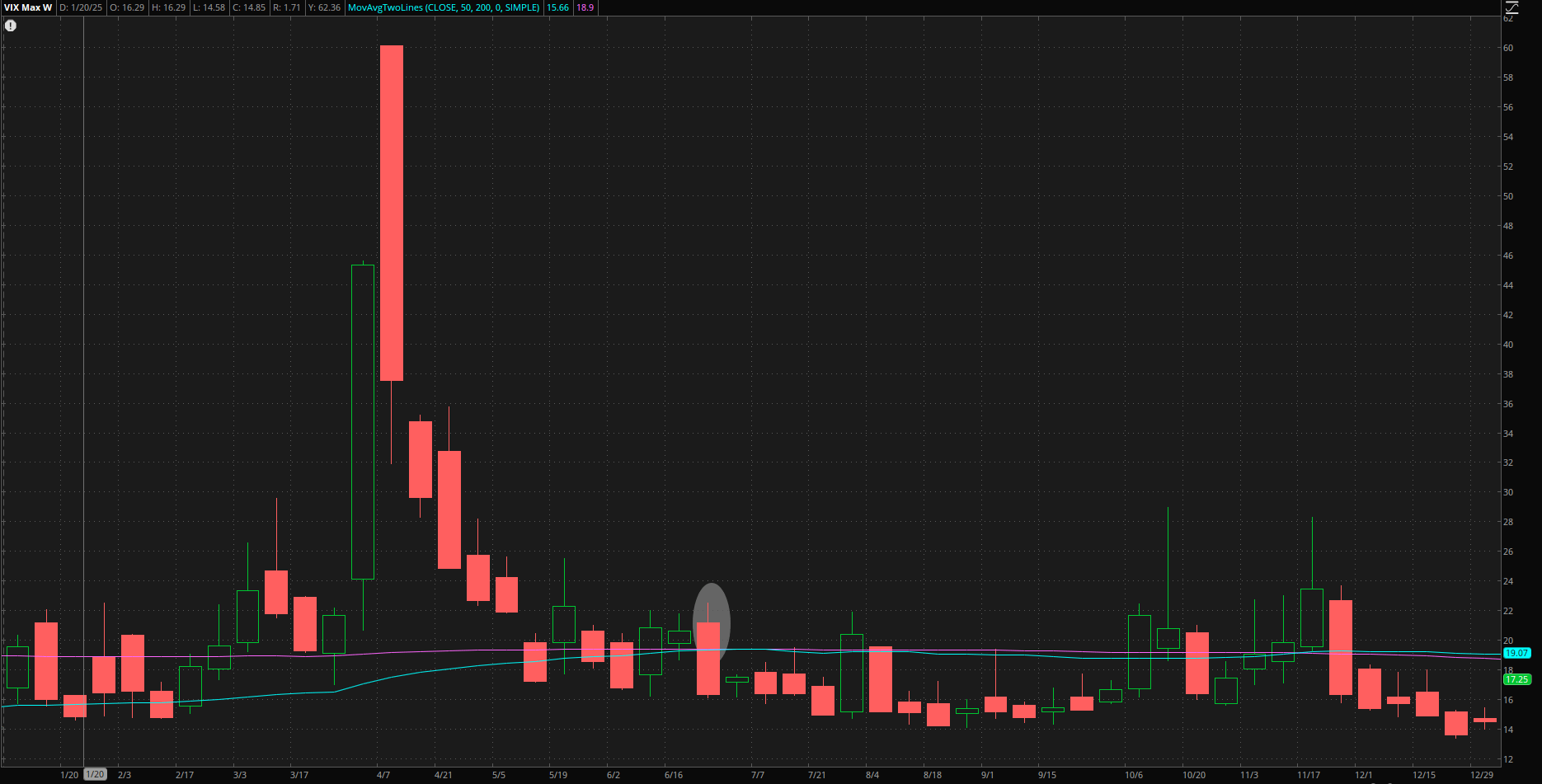
History Repeats: The Strike on Fordow
We saw this pattern play out again recently with the VIX spiking on news of a potential strike on Iran’s Fordow facility. While headlines shouted “Uncertainty,” my 2013 experience allowed me to stay calm. I recognized that the peak of uncertainty is often the exact moment to look for a short-volatility trade, regardless of the actual geopolitical outcome.
The market doesn’t care what actually happens. It cares what’s already priced in.
The Market Maker’s Edge
Trading volatility isn’t about predicting the news. It’s about predicting the market’s exhaustion with the news.
After years in the pits and on the screens, I’ve learned that the biggest opportunities often appear when everyone else sees only risk. The Syria crisis taught me to look for the moment when fear has been fully monetized, when the crowd has placed its bets, and when the only surprise left is that nothing surprising happens at all.
My goal for this Substack is to provide deep dives into volatility and market structure to help you move past the headlines and develop the pattern recognition that separates professional volatility traders from those who get swept up in the narrative.
I’d love to hear from you: What was your own “Woulda, Shoulda, Coulda” trade where the headlines kept you from seeing a clear opportunity?
Drop a comment below, and let’s build a community of traders who learn from both our wins and our misses.
If you found this valuable, subscribe for weekly insights on volatility trading, market structure, and the patterns that repeat when everyone thinks “this time is different.”
Thanks for reading Joe's Substack! Subscribe for free to receive new posts and support my work.