We’re heading into a short, data-stuffed week. Markets are fully closed Friday for the Fourth of July, which means the usual end-of-week data dump gets crammed into Thursday. Add in quarter-end rebalancing, a central banking summit in Sintra, and a tech sector that just had its worst week in months — and you have a near-perfect case study for why “growth with preservation of capital” isn’t a slogan. It’s a discipline.
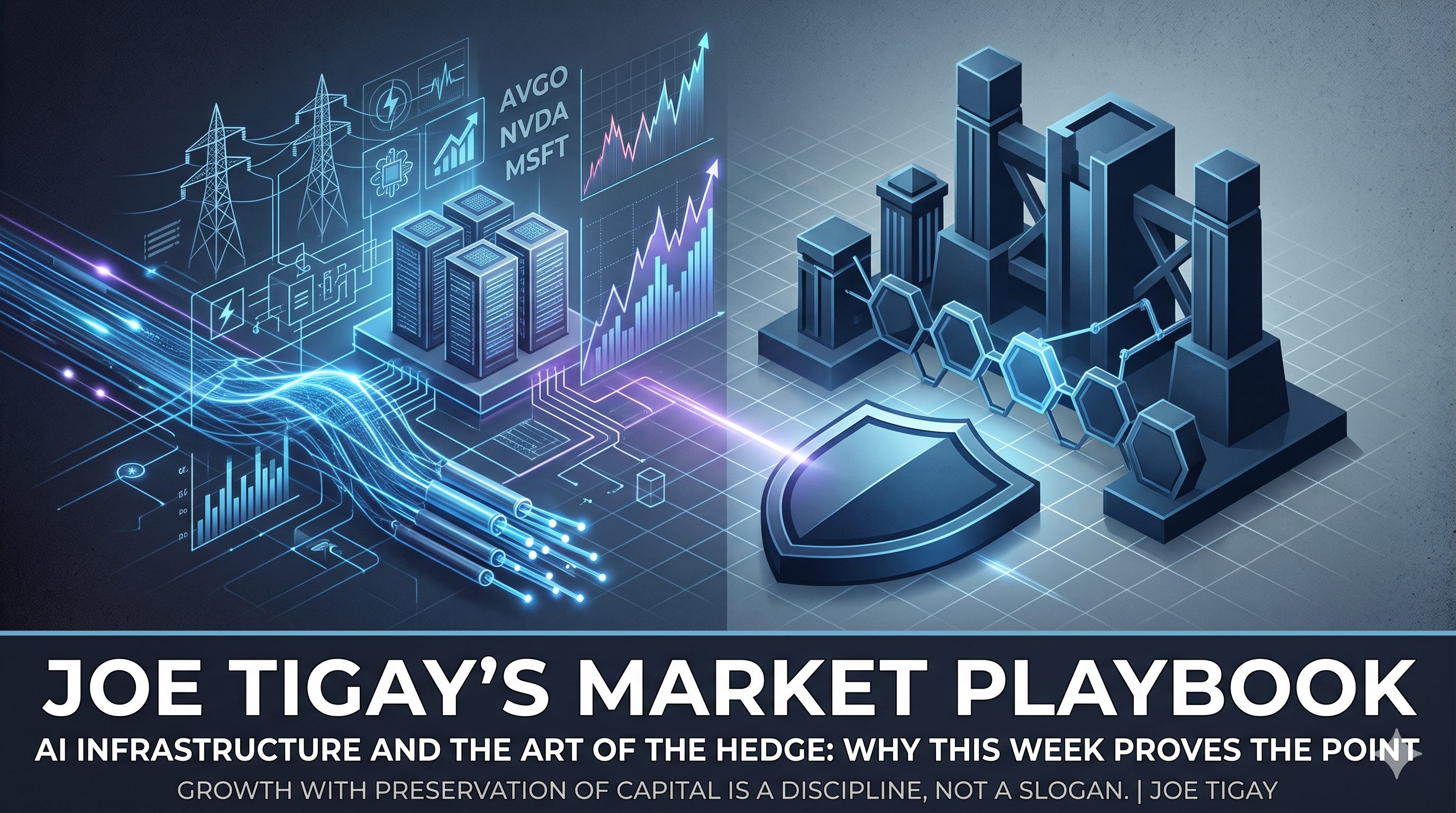
The Setup: A Compressed, Conflicting Week
Here’s what’s on the calendar:
Monday, June 29 — The Sintra Central Banking Forum kicks off in Portugal, with Dallas Fed manufacturing data as an early read.
Tuesday, June 30 — Quarter-end. May JOLTS job openings data lands (expected around 7.28 million). Nike reports after the close, with the Street watching China recovery and inventory. Formal rebalancing flows wrap up by the end of the day.
Wednesday, July 1 — ADP private payrolls and ISM Manufacturing PMI hit. New Fed Chair Kevin Warsh makes his first major international appearance on a Sintra panel alongside the ECB’s Christine Lagarde and the BoE’s Andrew Bailey.
Thursday, July 2 — The main event: June Non-Farm Payrolls, pulled forward because of the holiday. Consensus is looking for a softer 114,000 jobs versus May’s 172,000, with unemployment holding at 4.3%. Expect thin, choppy trading by the afternoon as everyone heads for the exits.
Friday, July 3 — Markets closed.
Layer onto that a 9% slide in WTI crude last week, down to just under $70, alongside a partial recovery in Strait of Hormuz shipping traffic. That’s disinflationary on its face, but it’s also a quiet signal worth watching for what it says about global demand.
This is worth pausing on, because it’s exactly the kind of move I flagged a month ago when nobody was talking about it. At the time, the dominant fear in the room was loss-driven: oil spiking toward $200 on Hormuz disruption, and investors scrambling to hedge against that tail risk. I raised the possibility that the opposite could happen — oil could simply fall and the market would catch a bid almost nobody was positioned for, because the crowd had built its entire risk picture around the upside scenario. That’s playing out now. The lesson isn’t “I called oil.” It’s that the catalyst the market eventually trades is rarely the one everyone’s staring at in the moment, and the fear that dominates the headlines is usually priced in well before it’s the actual risk.
Which raises the obvious next question: what’s the fear dominating the room today? It’s the 10-year racing toward 6%. That’s the fear-of-loss trade right now — the idea that sticky inflation, AI capex-driven cost pressures, and a hawkish surprise out of Sintra send yields sharply higher and hit equity valuations on the way. But just like oil a month ago, the crowd fixating on one direction is exactly why the other direction deserves attention. If Thursday’s jobs number comes in soft and Warsh’s debut leans dovish, rates could move quickly lower instead — and a market bracing for 6% could just as easily catch a bid on rate relief nobody is positioned for.
Two Ways to Respond to a Week Like This
Before getting into why, it helps to see the contrast side by side. Most investors default to one column. The structure I’m describing lives in the other.
Market Risk FactorThe Traditional MistakeThe Floor Trader StructureThe 10-Year Yield TrapGuessing a direction, or hiding in cashStaying long equities, using volatility tools to buffer both pathsMega-Cap Margin CompressionPiling blindly into overvalued software namesPositioning in physical AI infrastructure (power grids, data storage)Thin Pre-Holiday LiquidityTrusting standard backtests and spreadsheetsActive risk management built for real-time order flow
This is the FOMO-versus-fear-of-loss trap in its purest form. Chase the fear (sell into a 6% scenario, miss the rally if rates ease) and you’re whipsawed by your own hedge. Chase the FOMO (pile into the relief rally) and you’re exposed if yields actually do break higher. The honest answer is that you can’t position for one outcome and ignore the other — you have to build a portfolio that holds up whether the 10-year grinds toward 6% or reverses hard lower. That’s not indecision. That’s the discipline of being structurally ready for both directions instead of betting the whole book on guessing which fear wins this week.
And then there’s tech. The Nasdaq dropped 4.5% and the S&P 500 fell 2.0% last week — even after Micron posted blowout earnings — because Apple and Microsoft both raised consumer prices and pointed directly at doubling DRAM and NAND costs. Translation: the AI infrastructure buildout is starting to bite into margins at the very companies that have carried this market. Money rotated hard into value, cyclicals, and small caps as a result.
Why This Week Is the Thesis, Not a Distraction From It
This is exactly the environment that separates two kinds of investors: the ones forced into an all-or-nothing bet, and the ones who built in a structure ahead of time.
Reason one: this week validates both halves of the dilemma. A softer jobs print, a Fed Chair speaking for the first time on a global stage, a tech selloff tied directly to AI capex economics — any one of these could be the headline that either reignites the “AI infrastructure supercycle” trade or accelerates the rotation out of mega-cap tech. The same fear-of-loss-versus-FOMO tension running through the rates market right now runs through equities too. Most investors feel they have to pick a side: chase the AI buildout and accept the drawdown risk, or hide in cash and miss the next leg up. That binary is the wrong frame. The picks-and-shovels layer of AI — the data storage, the power grid buildout, the physical infrastructure — offers a way to stay positioned in the secular growth story without owning the most stretched, most headline-sensitive names. That’s the growth hook. The hedge is the guardrail that means you don’t have to bet the whole portfolio on getting the timing of the next macro print right.
Reason two: weeks like this are exactly where a floor trader’s instincts matter. Thin Thursday-afternoon volume into a three-day weekend, after a binary jobs number, layered on quarter-end flows that just unwound — that’s a textbook setup for an outsized, low-liquidity move in either direction. Reading that setup isn’t a spreadsheet exercise. It’s the kind of pattern recognition that comes from having actually priced risk in real time on a trading floor, not from a backtest.
Reason three: “just buy bonds” doesn’t answer this week’s actual problem. Standard diversification assumes stocks and bonds move in opposite directions when stress hits. But a week with a hawkish-or-dovish Fed Chair debut, a commodity move that could mean either disinflation or demand fear, and a tech selloff driven by AI-specific cost inflation isn’t a stock-versus-bond problem — it’s a volatility and concentration problem. Active hedging around a targeted, infrastructure-tilted equity exposure is built for exactly this kind of week: stay in the secular growth trade, but have a real floor under the portfolio when a single data print on Thursday morning can swing the whole market into the holiday.
The Takeaway
Markets don’t usually hand you a week this clean. A pulled-forward jobs report, a new Fed Chair’s debut on the world stage, an energy market sending mixed signals, and a tech selloff rooted in the AI buildout’s own cost structure — all compressed into four trading days before a long weekend. A month ago, the room feared oil at $200; today it fears the 10-year at 6%. Both times, the crowd’s fixation on one direction was the signal to prepare for the other. If your portfolio strategy only works when rates move one specific way, this is the week that finds the cracks. If it’s built to hold up whether yields grind higher or reverse hard lower — while still capturing the AI infrastructure cycle — this is the week that proves why that structure exists in the first place.